Heritage Corporate Restoration
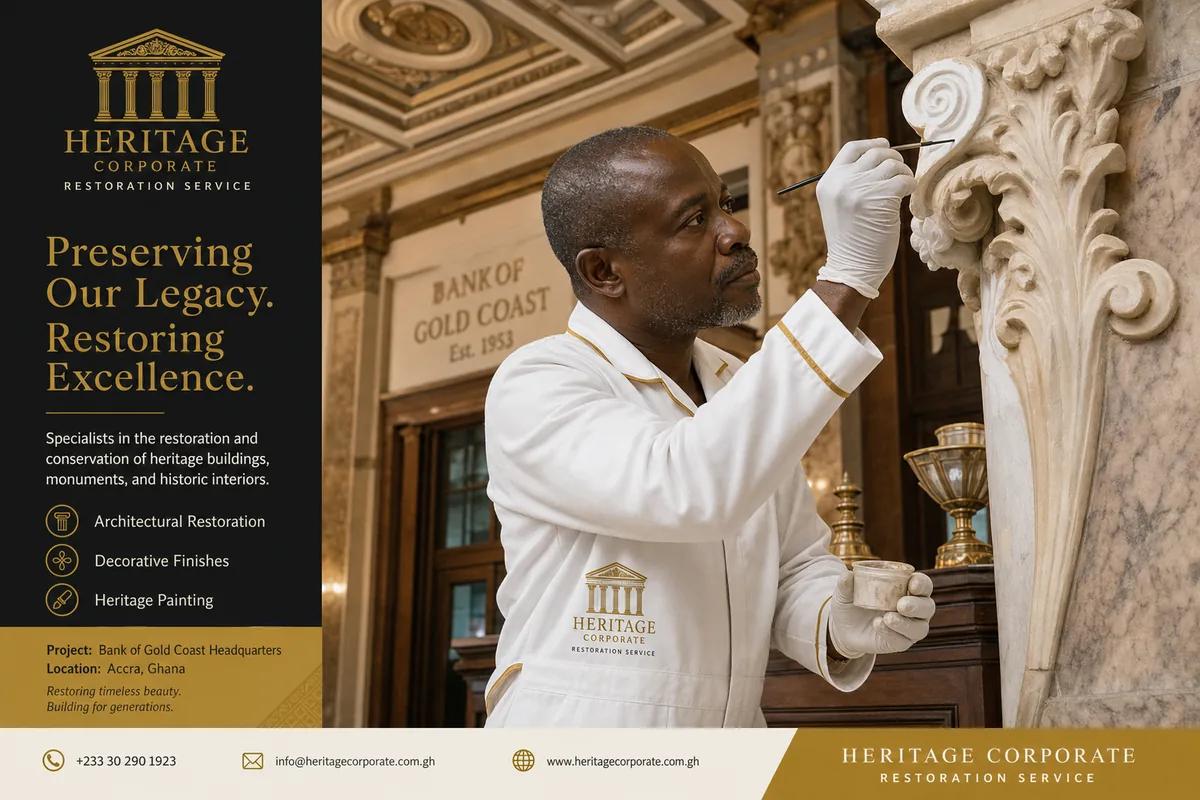
Restoration of older bank headquarters and heritage corporate buildings across Accra — breathable mineral coating systems compatible with original lime and masonry substrates, documented condition survey, and substrate-compatible specification that manages moisture rather than trapping it.
Heritage corporate restoration is the breathable, substrate-compatible recoating of older bank headquarters and landmark corporate buildings — specified to the original fabric, governed by a documented condition survey, and built to manage moisture rather than trap it. Corporate Painters has restored and maintained institutional façades across Accra and Tema since 1990.
Why Heritage Restoration Demands a Different Specification
An older bank headquarters or a landmark corporate building is not just a façade to be repainted — it is a masonry system that has reached equilibrium with its environment over decades, and the wrong coating can undo that equilibrium in a single season. Many heritage substrates were built from lime mortar and breathing masonry, designed to let moisture move out of the wall. Seal that wall with a modern impermeable film and the moisture has nowhere to go: it migrates, blisters the new coating, and accelerates decay in the substrate beneath. For an institution whose headquarters carries its identity and its history, a restoration that damages the building it was meant to protect is the worst possible outcome.
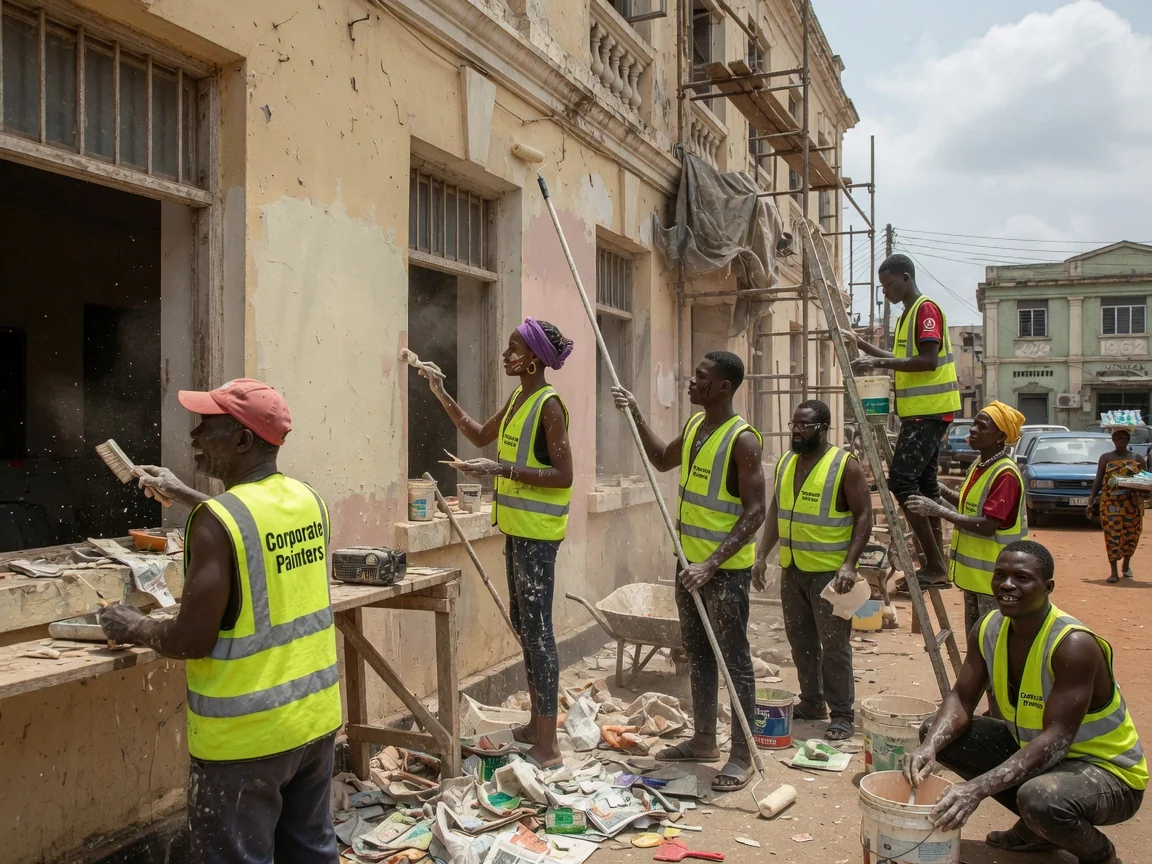
Institutional buyers commission Corporate Painters for heritage restoration because we specify to the building, not to a product catalogue. Since 1990 our corporate delivery model has treated breathability and substrate compatibility as the heart of the specification — beginning with a documented condition survey, selecting systems that work with the original fabric, and recording every decision so the institution understands what was applied and why. In Accra’s climate — ~81% coastal humidity and a UV index that peaks near 14 in April — the discipline matters: the finish must present to corporate brand standard while letting the historic wall continue to behave as it was built to.
How We Restore a Corporate Heritage Façade
Heritage restoration begins with diagnosis, not application. Each stage below is fixed in the written specification, so what is applied to the building is governed and recorded rather than improvised.
Condition survey & conservation assessment
A documented condition survey establishes substrate type, moisture state, existing-coating compatibility, and the cause of any existing failure before a system is selected. On a heritage façade the survey is the most important deliverable of all — it tells us whether the wall is breathing or sealed, where moisture is entering, and which previous interventions must be reversed. No system is named until the building has been read.
Breathable system selection
Where the substrate is lime or breathing masonry, breathable mineral coating systems are specified so water vapour can continue to leave the wall — the priority is moisture management, not film thickness. Impermeable film-forming systems are avoided on these substrates precisely because they trap moisture and shorten the life of both coating and wall. Specification favours reversibility and substrate compatibility over irreversible film-forming systems, so future restoration is not compromised by today’s intervention.
Substrate remediation
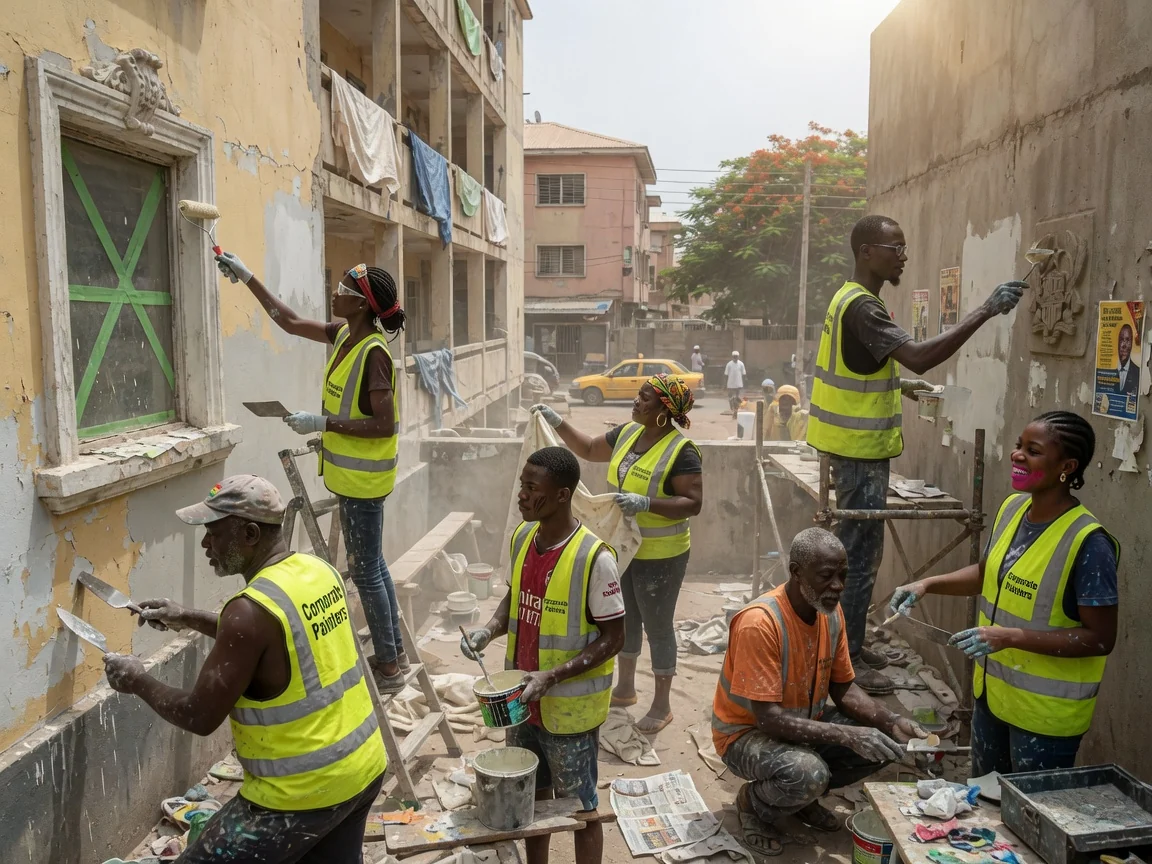
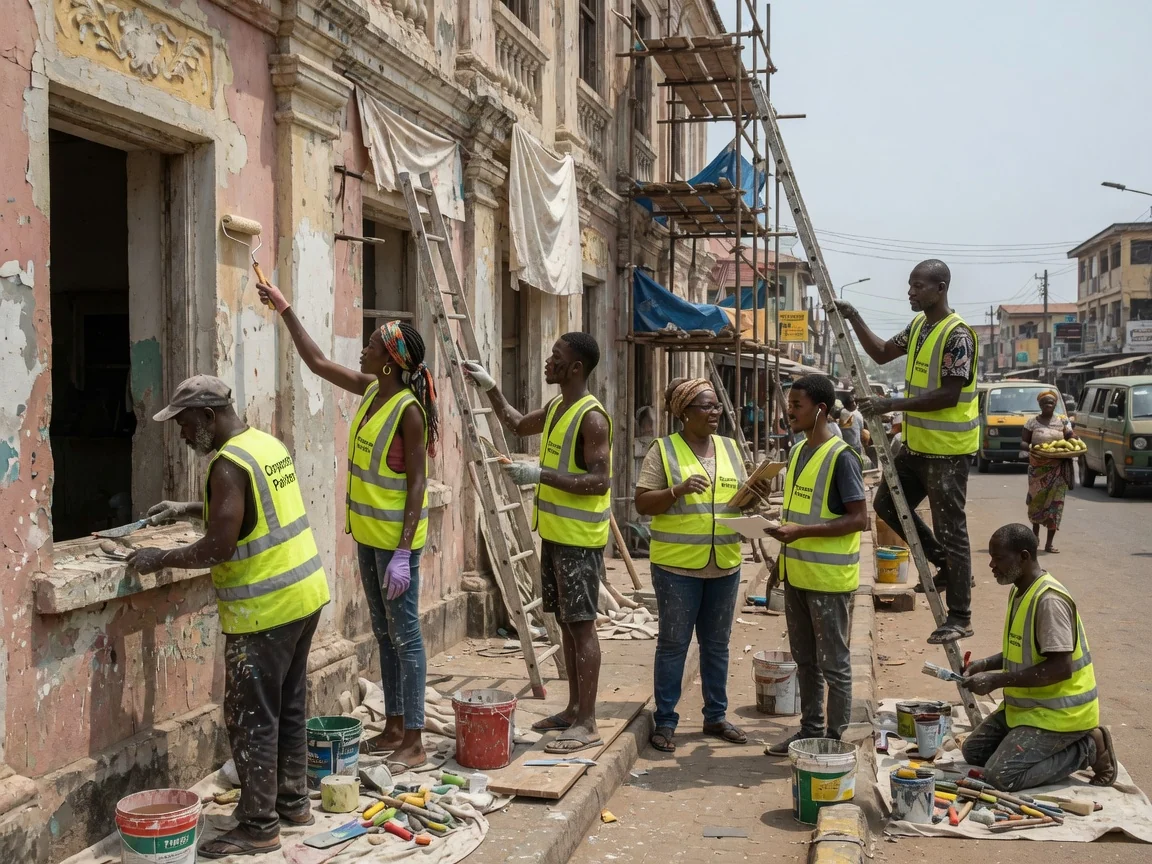
Failed coating, efflorescent salts, and contamination are removed and the underlying substrate remediated — repointing, render repair, and consolidation of friable surfaces — before any new system is applied. Preparation is graded to ISO 8501 but applied with restraint appropriate to historic fabric, removing failure and contamination without aggressive abrasion that damages original surfaces.
Sample, mock-up & matching the original finish
Sample boards and on-site mock-ups confirm that colour, sheen, and finish match the original before full application. Where the restored finish supports it, the build is documented and dry-film thickness verified to ISO 2808, and decade-warranty terms may apply — the warranty resting, as with all our work, on a recorded build rather than an assertion.
| Stage | What it establishes | Why it matters on heritage fabric |
|---|---|---|
| Condition survey & conservation assessment | Substrate type, moisture state, cause of failure | The specification is fixed to the building, not a catalogue |
| Breathable system selection | A mineral system that lets vapour escape | Prevents moisture entrapment that destroys coating and wall |
| Substrate remediation | Sound, contamination-free, repaired substrate | Restoration is durable rather than cosmetic |
| Restrained ISO 8501 preparation | Clean surface without abrasion damage | Original fabric is preserved, not eroded |
| Documented build (ISO 2808) | Verified, recorded film build | Warranty rests on evidence; fabric is maintainable |
Applications Across Ghana
- Older bank and financial-institution headquarters with original lime or breathing-masonry façades in Ridge and Bank Square
- Heritage corporate buildings requiring breathable, substrate-compatible coating systems
- Historic reception, banking-hall, and executive interiors where original fabric must be preserved
- Masonry, render, and lime-plaster substrates susceptible to moisture entrapment across coastal Accra and Tema
- Breathable-system recoating of historic façades where previous impermeable coatings have begun to trap moisture and fail
How We Deliver
- Condition survey & conservation assessment — read the building first; establish substrate, moisture state, and cause of failure before any system is named.
- Breathable system selection — specify a breathable mineral system for lime and breathing-masonry substrates; avoid impermeable films that trap moisture.
- Substrate remediation & restrained preparation — remove failed coating and salts, remediate the substrate, prepare to ISO 8501 with restraint appropriate to historic fabric.
- Sample, mock-up & documented build — match colour, sheen, and finish to the original; document the build and verify dry-film thickness to ISO 2808.
What It Costs
Heritage corporate restoration is priced on survey / to tender — the work is scoped to the building after the condition survey, never a per-square-metre rate. The breathable system, the extent of substrate remediation, and the conservation constraints are established by the survey before any number is given. Request a site survey, or submit your tender drawings and bill of quantities for a fixed proposal.
Areas We Serve
Corporate Painters restores heritage corporate buildings across Greater Accra — Ridge, Airport City, Cantonments, Labone, and the Tema industrial area — plus Kumasi and Takoradi.
Related Services
- Specification Coordination Services — the written, tender-ready specification behind every restoration
- Decade-Warranty Coating Systems — the enforceable manufacturer system warranty on a documented build
- Multinational HQ Painting — Grade-A tower frontage to specification
Frequently Asked Questions
Why not just use a modern weatherproof paint on a heritage façade? Older bank and corporate buildings were often built from lime mortar and breathing masonry designed to let moisture move out of the wall. A modern impermeable film traps that moisture: it migrates, blisters the coating, and accelerates decay in the substrate beneath. Breathable mineral systems let the historic wall continue to behave as it was built to.
What does a heritage restoration specification cover? It begins with a documented condition survey — substrate type, moisture state, existing-coating compatibility, and the cause of any failure — before any system is named. It then specifies a breathable, substrate-compatible mineral system, restrained ISO 8501 preparation, substrate remediation, and a documented build verified to ISO 2808.
Can a heritage façade match its original finish? Yes — colour, sheen, and finish are signed off against sample boards and on-site mock-ups before full application, so the restored façade presents to corporate brand standard while remaining faithful to the original appearance. The objective is a finish that respects the building, not one that overwrites it.
How much does heritage corporate restoration cost? It is priced on survey / to tender — heritage work is scoped to the building after the condition survey, never a per-square-metre rate. Request a site survey, or submit your tender drawings and BoQ for a fixed proposal.