Embassy & Diplomatic Painting
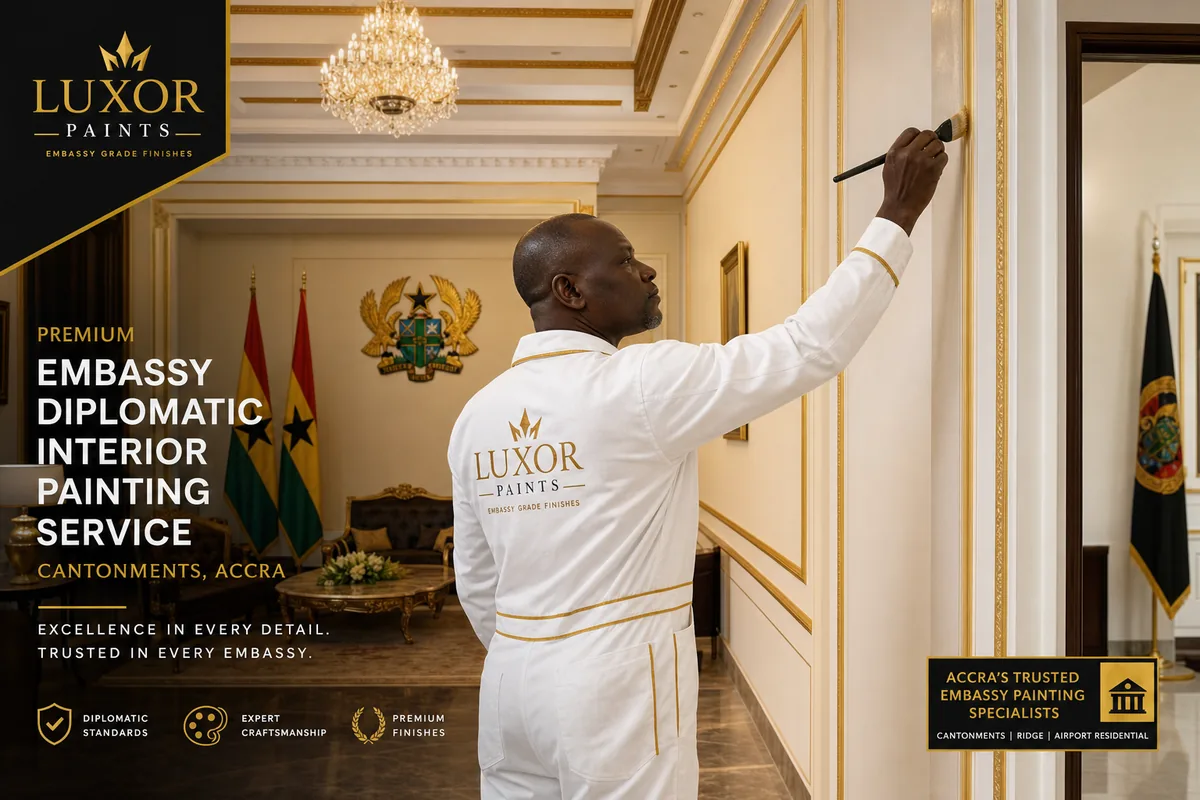
Embassy & diplomatic painting in Accra — finishing of security-sensitive, occupied premises by vetted, cleared personnel, low-odour rapid-recoat systems, dignified service maintained during works, and full discretion and documentation. Capability serving the Cantonments diplomatic quarter and Accra's wider institutional districts. Corporate Painters, since 1990.
Embassy and diplomatic painting is the finishing of security-sensitive, occupied premises — chancery offices, reception rooms and residence interiors — by vetted, cleared personnel working under escorted access, with the discretion, chain-of-custody and documentation a diplomatic facilities function requires. Corporate Painters has finished sensitive institutional interiors across Accra to a documented standard since 1990.
Why Diplomatic Premises Are a Controlled Operation
A diplomatic premises is a controlled environment. The finish carries the dignity of an institution, and the conditions under which it is applied carry that institution’s security and confidentiality requirements. Painting here is never a simple trade contract — it is a controlled operation inside a protected site, where who enters, what they carry and what they observe are governed as strictly as the result on the wall. A contractor that cannot manage access, custody and discretion to that standard cannot work in a sensitive premises at all.
Buyers in the diplomatic community commission Corporate Painters because security clearance, confidentiality and protocol are designed into the engagement, not bolted on. Our crews work under vetted, escorted access with chain-of-custody documentation, and our corporate delivery model produces a finish that reads as the dignity of the institution — with governance a facilities function can present to its own security authority. We describe this as a capability serving the diplomatic quarter; we do not name specific missions as clients.
Diplomatic-Site Constraints & How We Handle Them
Diplomatic work is defined less by the wall than by the constraints around it. Each constraint has a specified handling discipline, agreed with the premises before any material enters the site.
Access & personnel control
Entry is restricted to vetted, cleared individuals under escort. We coordinate clearance and access windows with the security function, and govern every entry and exit against an agreed list.
Occupied, sensitive operation
Reception rooms, offices and residences stay in use. Low-odour, rapid-recoat waterborne systems and phased zone-by-zone work keep the premises in dignified service during works.
Discretion & documentation
What is observed on site stays confidential, and what is delivered is recorded. A chain-of-custody and confidentiality discipline runs throughout, with a documented build handed over to the facilities function.
| Diplomatic-site constraint | How we handle it |
|---|---|
| Restricted, vetted access | Cleared, escorted crews under coordinated access windows; entry governed against an agreed list |
| Premises must stay in service | Occupied-premises phasing; low-odour, rapid-recoat waterborne systems; zone-by-zone work |
| Confidentiality of the site | Chain-of-custody discipline; observations held in confidence; non-disclosure maintained throughout |
| Dignified presentation during works | Containment, dust and signage control; presentation protected; sensitive areas screened |
| Verified record required | DFT verified to ISO 2808, colour and sheen signed off, documented build handed over to facilities |
| Heritage / period fabric where present | Breathable, substrate-compatible mineral systems to protect the fabric rather than trap moisture |
Applications Across Ghana
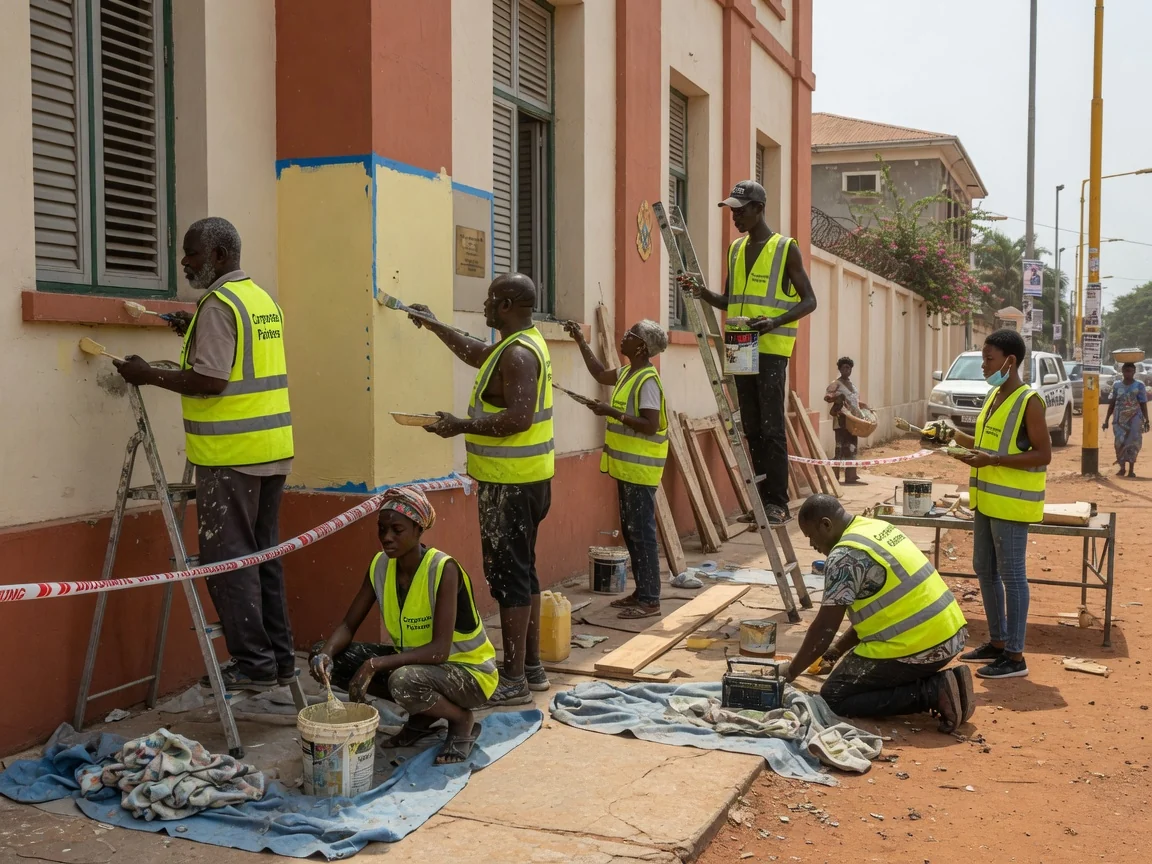
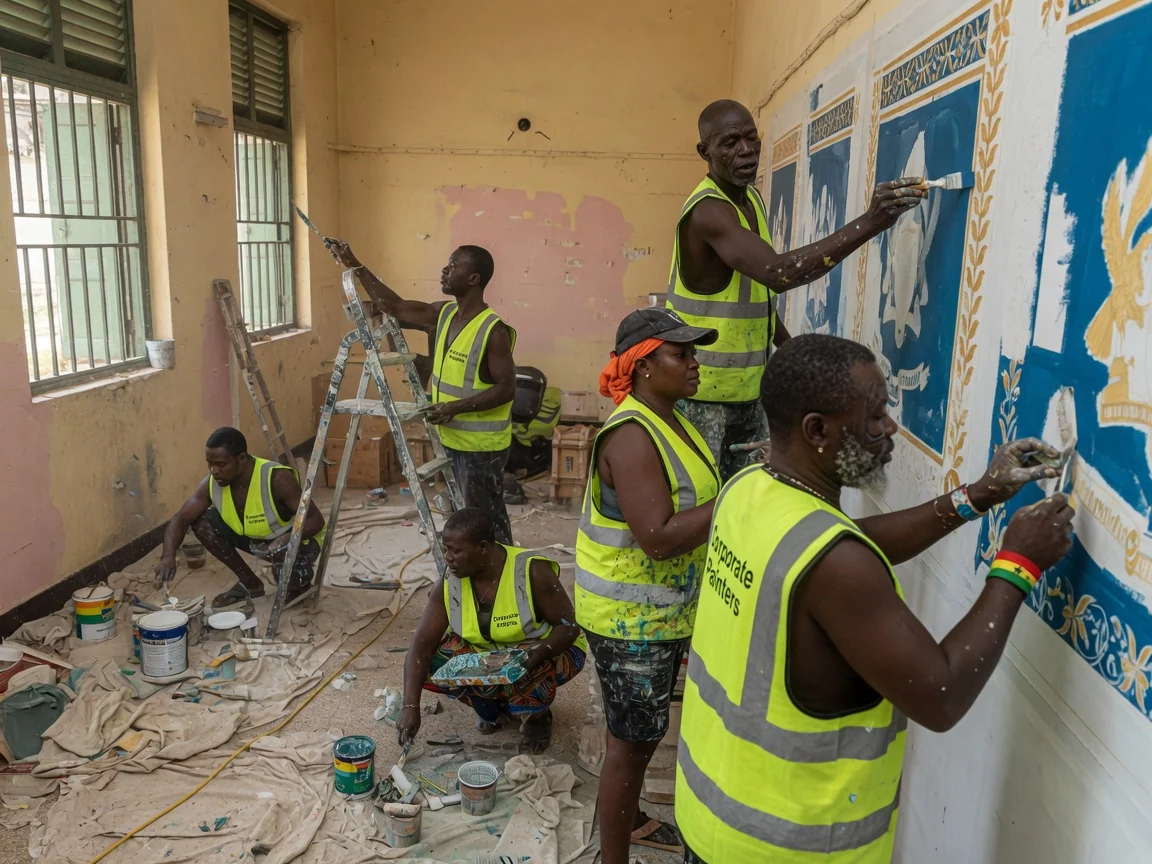
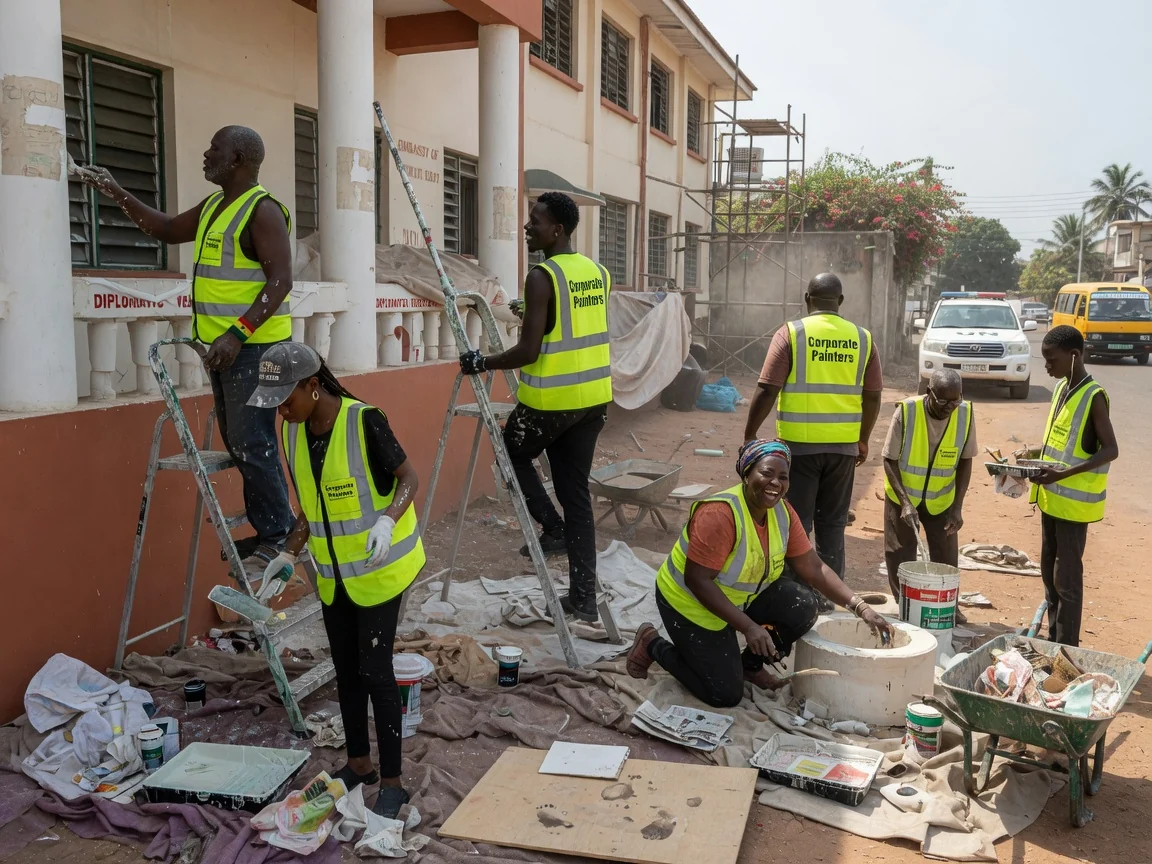
- Finishing of security-sensitive, occupied premises across the Cantonments diplomatic quarter of Accra — chancery offices, reception rooms and residence interiors (area context, not named clients)
- International-organisation and ministerial premises across Accra carry an identical access, discretion and documentation brief
- Occupied-premises programmes under low-odour, rapid-recoat waterborne systems so sensitive rooms stay in dignified service during works
- Heritage and period diplomatic buildings requiring breathable, substrate-compatible mineral systems
- Secure-zone ironmongery, gates and exposed steel within the diplomatic envelope, specified to ISO 12944 corrosion categories where within scope
How We Deliver a Sensitive Premises
- Access & vetting coordination — clear and vet the crew, agree escorted-access windows, establish chain-of-custody before any material enters.
- Survey & low-disruption system selection — grade substrate to ISO 8501; select low-odour, rapid-recoat waterborne systems for occupied rooms.
- Discreet, documented application — work under escorted access, governing entry, materials and observations to the premises’ requirements.
- QC, reinstatement & documentation handover — verify DFT to ISO 2808, sign off colour and sheen, reinstate to service, hand over the documented build.
What It Costs
Embassy and diplomatic painting is priced on survey / to tender — security-sensitive work is scoped to the premises, the access and vetting constraints, and the systems specified, never a per-square-metre rate. Exterior durability is specified against the local load — the Accra UV index peaks near 14 in April, and coastal humidity (~81% Accra) drives the performance brief. Request a site survey, or submit your scope and bill of quantities for a fixed proposal.
Areas We Serve
Corporate Painters finishes sensitive institutional premises across Greater Accra — Ridge, Airport City, Airport Residential, Cantonments, Labone, and the Tema industrial area — plus Kumasi and Takoradi.
Related Services
- Specification Coordination — the written, tender-ready spec behind the finish
- Heritage Corporate Restoration — breathable systems for period diplomatic fabric
- Decade-Warranty Coating Systems — the enforceable manufacturer system warranty
Frequently Asked Questions
How do you paint a security-sensitive or occupied diplomatic premises? As escorted, cleared work inside a controlled site. We coordinate vetting and access windows with the facilities and security function, maintain chain-of-custody over who enters and what they carry, and proceed under containment so the premises stays in dignified service during works. Discretion and documentation are designed into the engagement, not bolted on.
Can the premises stay in use while you paint? Yes — diplomatic finishing is delivered as occupied-premises work. Low-odour, rapid-recoat waterborne systems are specified so reception rooms, offices and residence interiors remain usable, and phasing keeps sensitive areas in service. VOC is specified low-odour / waterborne for occupied premises — not against any Ghana legal limit (none exists; Ghana’s binding paint regulation is lead content, GS 180:2022, 90 ppm).
How is confidentiality and documentation handled? Under a chain-of-custody and confidentiality discipline agreed with the premises before mobilisation: vetted crews, escorted access, governed entry of materials, and a documented build handed over so the facilities function holds a verified record it can present to its own authority. The diplomatic quarter is referenced here as area context — we describe capability, not named clients.
How much does diplomatic painting cost? It is priced on survey / to tender — security-sensitive work is scoped to the premises, the access and vetting constraints, and the systems specified, never a per-square-metre rate. Request a site survey or submit your scope and BoQ for a fixed proposal.